English
  Russian
  Korean
  Spanish
  Japanese
  Polish
  Thai
Thai  Indonesian

With the increased demand for spirits, there is a need for a bottling procedure that can be able to match production levels and be consistent. Gin, whisky, rum, vodka, liqueurs, and other types of alcohol can involve a number of bottling activities that include bottle rinsing, filling the liquids, capping, labeling, and checking of bottles. It becomes increasingly challenging to undertake all these procedures manually when the production levels reach thousands of bottles per day. The Spirits Filling Production Line integrates all these procedures into one continuous process.
1. What Challenges Can Automation Solve in Spirits Filling Production Line?
Before making an investment in automated machinery, one must know what kinds of issues arise during spirits filling manually. Very often, the problems do not come from one specific process but from the interaction between different processes.
Limited Speed of Production
During manual loading, filling, and transportation of spirits into bottles, workers need to work at a certain pace. This may be quite easy for small quantities of spirits but becomes more difficult with hundreds or even thousands of bottles produced per hour. Workers’ tiredness, pauses, and variations in their work pace influence the speed of production.
Variations in Quantity of Filling
Spirits are usually sold based on a certain volume. Variations in quantity of filling in different bottles may cause either product loss or additional quality control. An adequately configured Spirits Filling Production Line can help to minimize these variations with the help of controlled filling systems.
Delays between Stages of Packing
Filling is only one part of the bottling process. After filling, bottles may need to go through capping, capsule shrinking, labeling, coding, and inspection. When each step is handled separately, bottles must often be moved manually between stations. Once the operating speed of a specific process lags behind that of others, it can lead to bottle accumulation and production interruptions.
Automation can solve these problems by coordinating individual machines and creating a smoother flow from one operation to the next.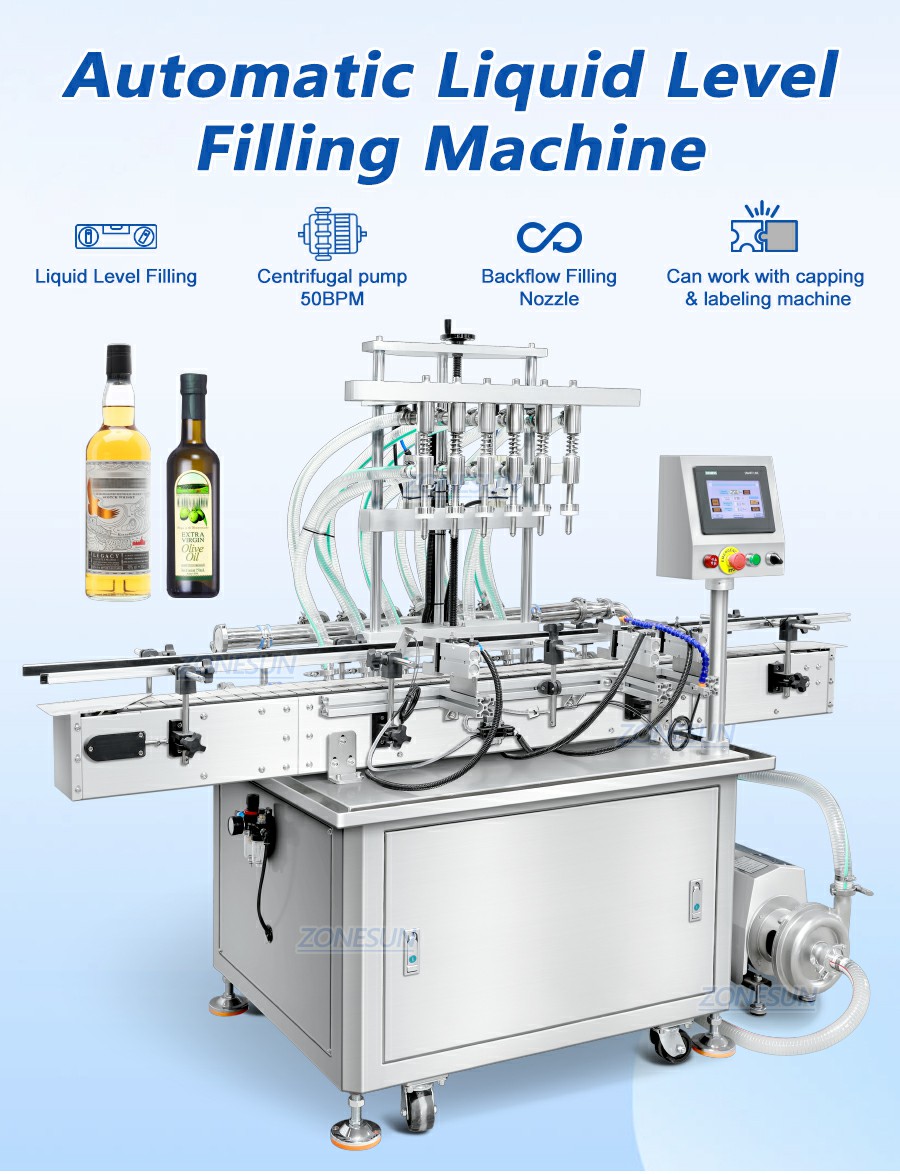
2. What Are the Benefits of Using an Automated Spirits Filling Production Line?
It is not just because of the fact that a machine works faster in isolation that makes automation valuable. The importance lies in the synchronization of a number of operations at a steady speed. It proves especially convenient for distilleries and contract bottling facilities with recurring orders for production.
Increased Overall Production Efficiency
Automatic bottle feeders, automatic filling, and automatic capping decrease the time needed for manual movement. According to the type of equipment, some machines can work at 20-40 bottles per minute, while others can produce over 10,000 bottles per hour. Actual output will depend on various conditions, such as the size of the bottle, volume of filling, liquid properties, and packaging requirements.
Less Manual Work Repetition
An Automated Spirits Filling Production Line is capable of performing routine tasks, such as bottle positioning, dosing of the liquid, transferring, and capping. Thus, employees are free to monitor the process, refill materials, and perform quality checks. It may help to better manage staffing during production periods.
Improved Synchronization of Operations
Connecting different packaging stations helps reduce unnecessary handling. Once bottles leave the filling station, they can move directly to the next operation through conveyors rather than being collected and transferred manually.
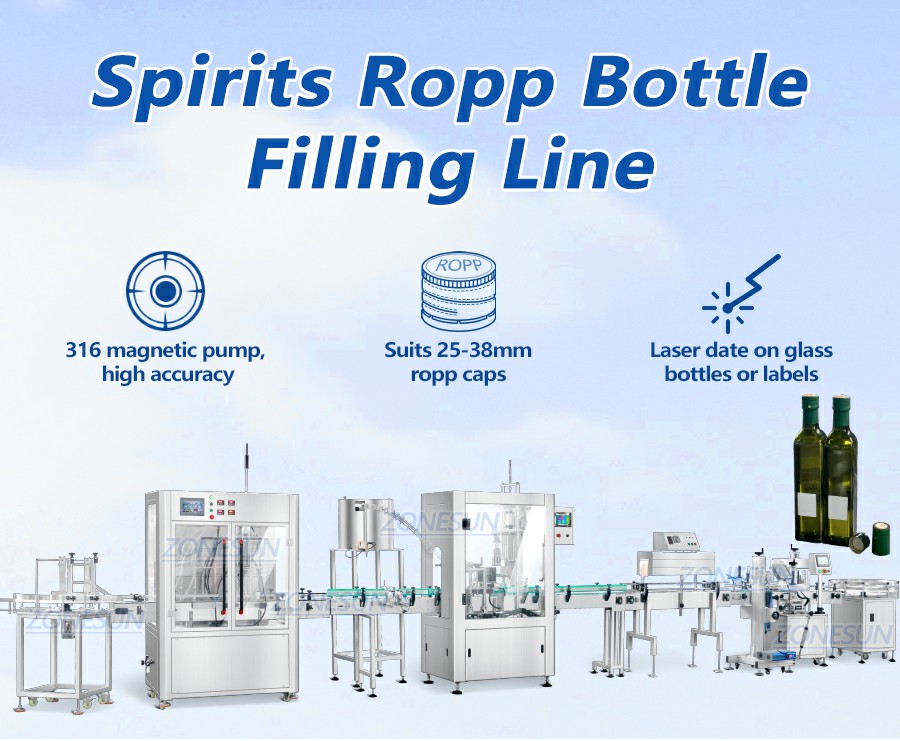
For instance, the ZS-FAL180G2 Automatic Spirit Liqueur Filling Line is intended to unite a number of processes in the packaging of liquors and spirits. The basic characteristics of the device are as follows:
- Unified process: Involves unscrambling of bottles, filling, ROPP capping, PVC capsule shrinking, laser marking, two-sided labelling, and collection of finished products.
- Throughput: Approximately 20-40 bottles per minute, depending on the volume of the fill and characteristics of the product.
- Filler: Utilizes a SUS316 magnetic pump for the transportation of the liquid during the fill.
- Filling accuracy: For volumes less than 100 ml, the deviation is approximately ±1 ml; for volumes more than 100 ml, the deviation is approximately ±1%.
3. Can an Automated Spirits Filling Production Line Improve Product Quality?
Production speed is only one reason to consider automation. For spirits producers, maintaining consistent filling and packaging quality is equally important. An automated spirits filling production line uses controlled movements and preset parameters, which can reduce variations caused by manual operation.
More Consistent Filling Results
A controlled filling system can help reduce differences in the amount of liquid delivered to each bottle. This is particularly useful for products that require a consistent net volume across an entire production batch.
Reduced Splashing During Filling
Some spirits can splash or foam when filled at high speed. Filling nozzles that move vertically or enter the bottle during the filling cycle can help control the flow and reduce unnecessary splashing. The correct filling method should be selected according to the liquid properties and bottle design.
More Consistent Capping and Labeling
Packaging quality also depends on the final sealing and labeling operations. Uneven capping pressure may affect the seal, while inaccurate label positioning can reduce the visual consistency of finished bottles. An automated spirits filling production line can help minimize these differences.
The Automatic 4 Heads Cocktail Bottle Filling Capping Labeling Line from ZONESUN PACKAGING is designed for continuous packaging of cocktails and related alcoholic beverages. Key features include:
- Four filling heads: Four filling nozzles work simultaneously to increase filling efficiency.
- Diving filling: The filling nozzles can enter the bottles during operation, helping reduce liquid splashing.
- Automatic corking: The system includes cork feeding and corking functions to reduce manual stopper placement.
- PVC capsule shrinking: Heat-shrinking equipment provides additional finishing around the bottle neck.
- Automatic labeling: Designed for labeling round bottles, its labeling accuracy is approximately ±1.0 mm.
- Production speed: Approximately 1200-1800 bottles per hour. The speed will vary according to bottle formats, filling volumes, and production conditions.
Different Closures Require Different Equipment
There is no single closure system that suits every type of spirits bottle. Products using threaded caps have different requirements from gin or whiskey bottles fitted with T-shaped cork stoppers. Therefore, when selecting a Spirits Filling Production Line, producers should consider various factors, including the bottle neck, closure type, bottle dimensions, and final packaging format.
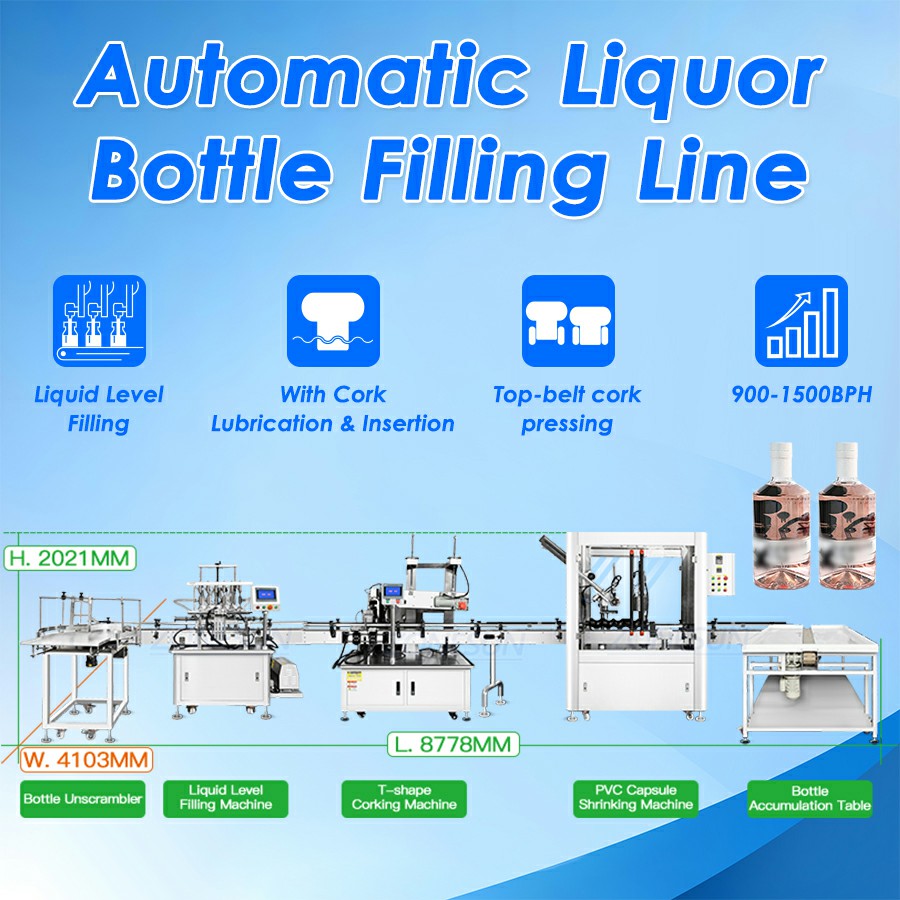
The ZS-FAL180V11 Automatic Gin Distilled Liquor Bottle Filling and Corking Machine is designed for distilled spirits that use T-shaped cork stoppers. Its main functions include:
- Overflow filling: Helps maintain a consistent liquid level between bottles.
- Automatic cork feeding: Delivers T-shaped cork stoppers automatically, reducing manual placement.
- Automatic corking: Inserts and secures the stopper with a controlled mechanism.
- PVC capsule shrinking: Adds a finishing layer around the bottle neck after corking.
- Suitable applications: Can be used for gin, whiskey, tequila, and other non-carbonated alcoholic beverages.
- Production capacity: Approximately 900-1,500 bottles per hour, depending on production conditions and product specifications.
4. Conclusion
Using an automated Spirits Filling Production Line can not only achieve a higher filling speed. For producers with regular or growing production volumes, automation can connect bottle feeding, filling, capping, labeling, and inspection into one coordinated process. This reduces manual transfer and helps keep production and packaging more consistent.
The right configuration, however, depends on the product rather than simply the desired level of automation. Producers should consider filling volume, bottle dimensions, bottle neck design, closure type, target output, and future capacity requirements. If you are planning an Automated Spirits Filling Production Line tailored to your product, feel free to contact ZONESUN PACKAGING. We can help evaluate your bottle format, product characteristics, and production requirements to determine a suitable automated filling setup.