English
  Russian
  Korean
  Indonesian
  Spanish
  Thai
Thai 

The productivity of a filling line is not solely dependent on the rate at which the filler works. The characteristics of the liquid, size of the bottle, efficiency of filling, among other things, determine how many bottled products will be produced in an hour. Monoblock Bottle Filling Machine combines several operations involved in packaging in one single machine to facilitate ease of production and minimize time for transferring goods from one stage to another in the process of packaging. However, its productivity is reliant on its efficiency.
1. How Is Monoblock Bottle Filling Machine Speed Measured?
Bottles Per Minute and Hourly Output
The velocity of machines is measured in BPM or BPH. These statistics serve as initial information for equipment comparison, but a client should know the distinction between the theoretical capacity of the machine and the quantity of bottles that can be produced during one shift. The basic formula will look like this:
Output per hour = Bottles per minute × 60
If the machine has a speed of 60 BPM, it theoretically makes 3,600 bottles per hour. In case the shift consists of 8 hours, and there are 7 productive hours of work, the output will equal 25,200 bottles, provided that the speed does not change.
Rated Speed vs. Actual Production Speed
The rated speed of a Monoblock Bottle Filling Machine is normally defined based on the machine working under specific conditions. The production speed represents the performance obtained by the machine when a specific product is filled in a specific container and using specific production settings. To compare different types of machines, buyers need to consider the following:
- The rated speed and the test conditions.
- The filling accuracy at the specified operating speed.
- The availability of bottles, caps, and filling equipment.
- The expected idle time related to cleaning, changing, and maintenance processes.
The above information gives a better basis for capacity estimation. Buyers of the Monoblock Bottle Filling Machines must compare the performance under similar conditions.
2. 7 Key Factors That Affect Monoblock Bottle Filling Machine Speed
Liquid Viscosity and Filling Properties
Properties of liquids significantly impact the time needed to fill the bottles. Liquids similar to water flow relatively fast; however, products that have a high viscosity, such as syrups, creams, and oils, will be filled more slowly. Foamy liquids also have to be filled properly without creating any splashing.
Thus, if one liquid needs 2 seconds to be dispensed, it is obvious that the time needed to fill the bottle will be longer than if it were 0.8 seconds. It is necessary to ensure that a Monoblock Bottle Filling Machine is compatible with the product viscosity, temperature, foamability, and the volume of liquid used for filling.
Filling System and Number of Filling Heads
The number of filling heads and the design of the dosing system greatly affect the capacity of the filling machine in one cycle. But several filling heads don’t guarantee a large capacity if the liquid supply, filling precision, and indexing mechanism cannot ensure a steady filling rhythm. It is necessary to consider the number of filling heads and the quantity of liquid needed for the bottles’ filling by a Monoblock Bottle Filling Machine.
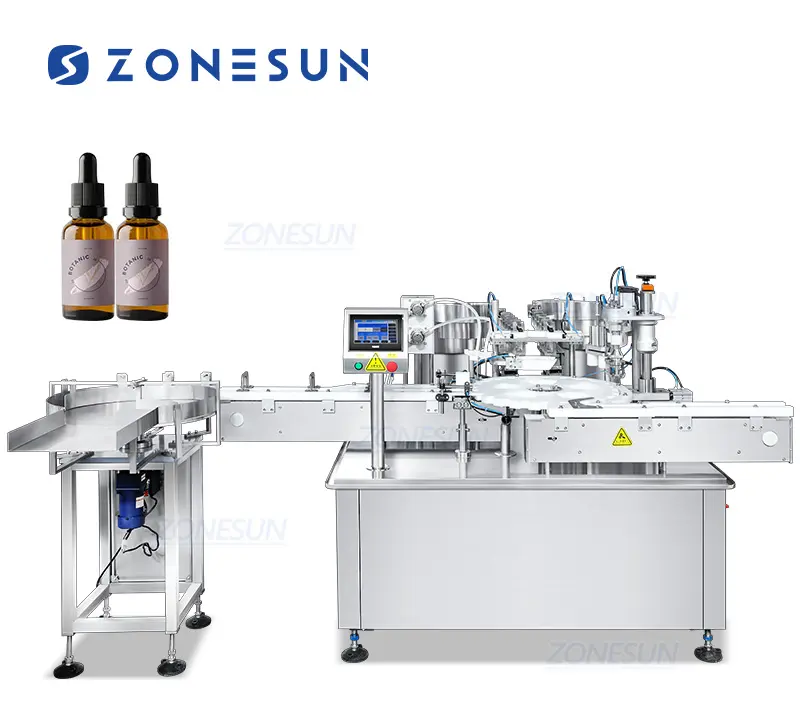
When filling small-volume products, an unsuitable dosing system or inefficient bottle positioning can slow production and reduce filling consistency. The ZONESUN PACKING ZS-AFC27YT monoblock automatic eye serum dropper bottle filling and capping machine addresses these needs with dual filling heads, SUS316 magnetic pumps, and a cam indexing system. With a listed speed of 60–70 bottles per minute and a filling range of 1–100 mL, it is designed for small-volume liquid packaging.
Bottle Size, Shape, and Stability
The volume, shape, and design of bottles matter a lot in handling bottles in the packing machine. The bottles of tall, narrow, light or odd shape need more supports to prevent falling and provide proper orientation of bottles. Besides, the larger filling volume takes more time; for example, the process of filling a 500 mL bottle will take more time than the process of filling a 100 mL bottle with the same filling rate.
Measure the bottle body’s diameter, bottle height, neck size, and its cap diameter before production. Using compatible positioning devices and guide rails can avoid the risks of bottle jams and material spillage.
Conveyor Speed and Bottle Transfer
Conveyor speed and methods of transferring bottles from one station to another play an important role in the smooth functioning of the bottles’ movement process. If the spacing between bottles is not correct, or the bottle transfer is delayed, it will affect the machine’s production output.
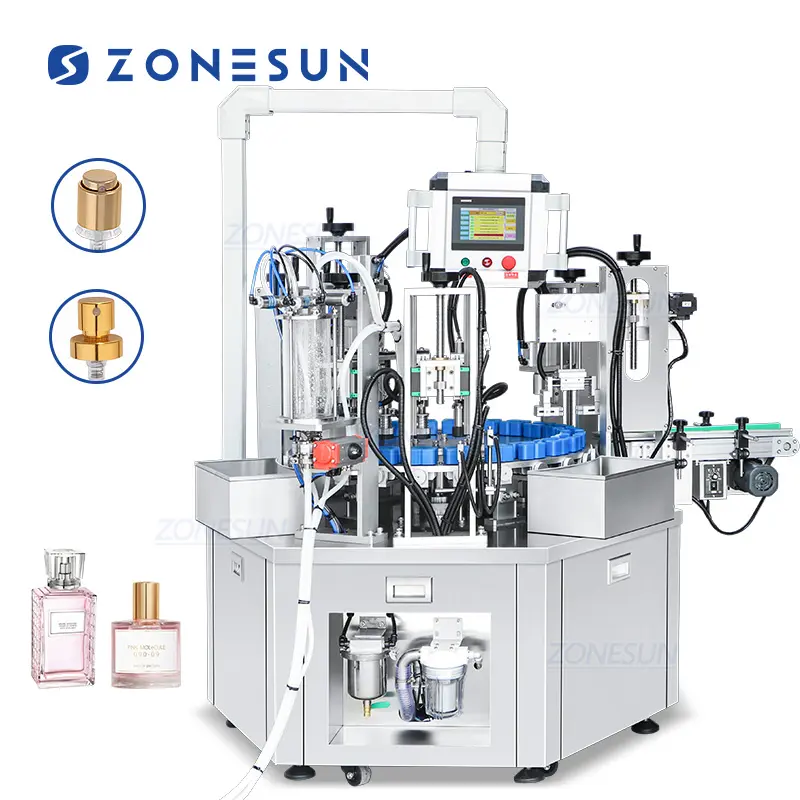
When bottles must pass through separate rinsing, filling, and capping machines, additional transfers can create more opportunities for delays and positioning errors. The ZONESUN PACKAGING Compact System Perfume Bottle Rinser Filler Capper Machine combines these operations in one system. It can help to simplify the packaging workflow and reduce transfers between standalone machines. Its integrated design is worth considering when manufacturers want to streamline bottle handling and improve coordination between successive packaging stages.
Machine Settings and Changeover Time
The correct setting of parameters like fill time, flow rate, conveyor speed, indexing time, and capping torque will increase the effectiveness of the manufacturing process. Nevertheless, wrong settings may result in overfilling, leakage, or problems in moving bottles properly. Hence, operators need to make one parameter adjustment at a time and monitor both the number of bottles and their quality.
A changeover process may include the adjustment of nozzles and guides as well as recipe changes. The standardized approach to the changeover process and an easily adjusted machine will allow decreasing its time without compromising the quality of bottles and the filling process.
Capping and Other Integrated Operations
The output of the filling line depends not only on the speed of filling. If there is a lack of coordination between filling and capping processes, then bottles will be stuck between these processes, which results in delays and reduced efficiency.
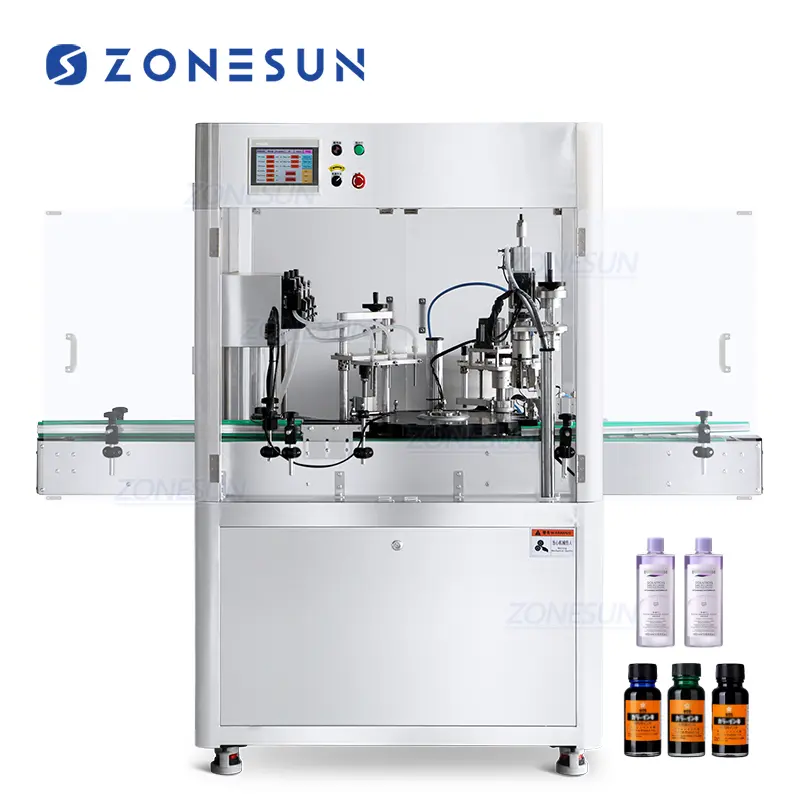
To improve coordination between filling and capping, the ZONESUN PACKING ZS-AFC28 rotary automatic liquid solution bottle filling and capping machine combines these operations in one system, with a production speed of up to 40 bottles per minute and a filling range of 10–100 mL. It uses a rotary design that makes it possible for the machine to perform continuous transfer of bottles between stations. This allows decreasing the time delays during packaging. It is very significant for the Monoblock Bottle Filling Machine because any delay will affect the entire operation.
Maintenance and Equipment Reliability
Wear and tear, contamination, and equipment failures will reduce performance and lead to unplanned downtime. The main equipment failures that occur include clogged nozzles, worn seals, malfunctioning sensors, fluctuations in liquid flow, and problems in cap feed mechanisms. Observing the manufacturer’s maintenance tips and tracking machine downtime and faults may aid in identifying the recurrent faults.
3. How to Improve Monoblock Bottle Filling Machine Efficiency
Match Machine Capacity to Product Requirements
Select equipment taking into account the hourly output rate, fluid characteristics, size of the package, and packaging form. The Monoblock Bottle Filling Machine, adjusted for your particular working environment, will have a higher chance of remaining in good working condition compared to a machine chosen solely according to its maximum output. Try to ask for product testing. It can be useful to test the machine using your particular fluid and containers.
Optimize Operating Parameters
Develop a fixed production formula for each product and bottle combination. Document the settings for volume, flow, conveyor, and cap torque for the various products. Test performance at various speeds rather than selecting the highest speed right away. The recommended speed should be the one that provides the desired amount of compliant packages with reasonable downtime and wastage. Each Monoblock Bottle Filling Machine has the “recipe” memory function to record these settings for quick product change.
Reduce Downtime Through Preventive Maintenance
Clean, lubricate, and inspect the equipment, and replace wear parts in accordance with the machinery manual. Ensure a stock of common spare parts is readily available and train operators to recognize early warning signs of equipment failure. Monitor the actual throughput, the number of defective bottles, changeover time, and unplanned downtime. This data is crucial for distinguishing between “speed bottlenecks” and losses caused by insufficient material supply or frequent stoppages. Regular performance checks will enable you to know whether your Monoblock Bottle Filling Machine is running near the expected maximum capacity.
4. Conclusion
The speed of a Monoblock Bottle Filling Machine will vary when handling different products. The properties of the liquid, shape of the bottles, filling head capacity, operating conditions, and maintenance will all affect the production speed. Boosting efficiency involves optimizing all these aspects while sustaining the filling precision and packaging quality.
If you are considering purchasing a Monoblock Bottle Filling Machine for your production line, contact ZONESUN PACKAGING to consult regarding the characteristics of your product and bottles, and the desired capacity.