English
  Russian
  Korean
  Indonesian
  Spanish
  Thai
Thai 

Manual filling, capping, and labeling inevitably present pain points: inconsistent filling volumes, sticky dirt around the nozzle, caps that are “tight enough” but are actually loose, and a lot of time spent correcting small mistakes. That is exactly why many personal care factories move to an automatic filling line, especially for body lotion and hand sanitizer, where speed and cleanliness matter.
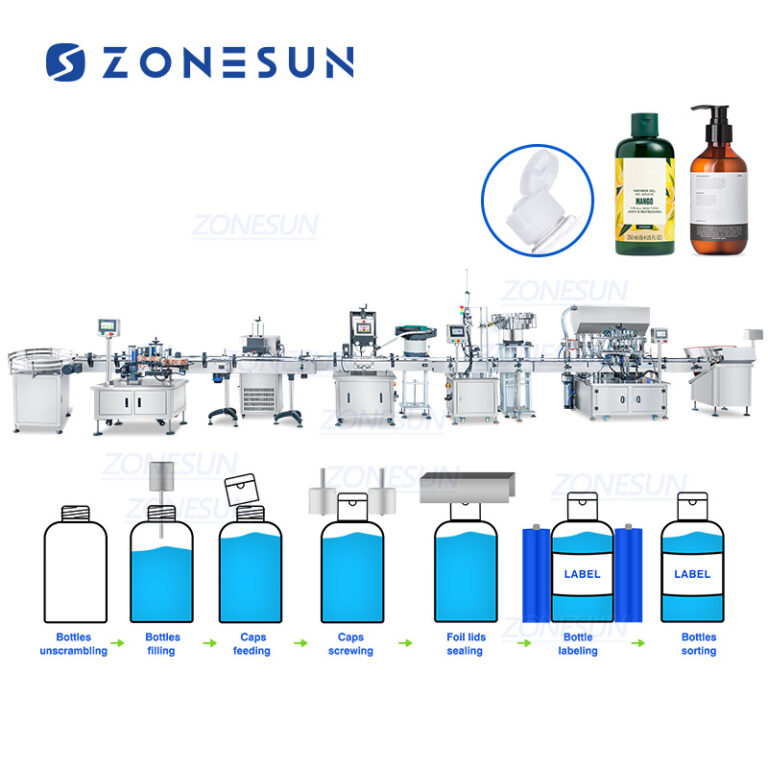
The ZONESUN lotion and hand sanitizer solution is built as an automatic filling line that connects several packaging steps into one smooth flow. The key idea is simple: bottles are fed in, filled with controlled dosing, capped, and then checked by a checkweigher so underfilled or overweight bottles can be handled before they reach boxing. In day-to-day production, that checkweigher step is what helps keep “pretty good” filling from turning into giveaway, complaints, or rework.
What machines are included, and what is their Composition?
A typical setup like this automatic filling line is a mix of modules. Depending on your bottle and cap styles, the line often includes:
- Bottle feeding and conveying: to keep containers moving and spaced.
- Filling station: commonly piston or pump-based filling for sanitizer and lotion (so it can handle different viscositywithout splashing everywhere).
- Capping station: cap placing plus tightening, so torque is more consistent.
- Checkweigher: confirms each bottle is within the target range, and flags rejects.
- Optional labeling or coding: many buyers addlabeling and date coding as the next step.
In terms of hardware, it is basically made of stainless steel, with conveyor belts, sensors, motors, and filling components, all of which can be cleaned quickly. On the software side, operators usually work through a touch screen where they set fill volume, speed, timing, and alarm limits. This is where an automatic filling line becomes easier than it sounds, because once the “recipe” is set, the line repeats it without relying on someone’s pouring rhythm.
What Other Products are Recommended?
If you are building a broader packaging plan, these ZONESUN lines are worth checking alongside this automatic filling line:
(1) Automatic Drink Aluminum Can Filling Line
A good production line for packing carbonated drinks into aluminum cans.

(2) Automatic Cosmetic Face Cream Filling Line
Useful if you handle thicker, sticky products and want to see how piston-style dosing is applied in cosmetics

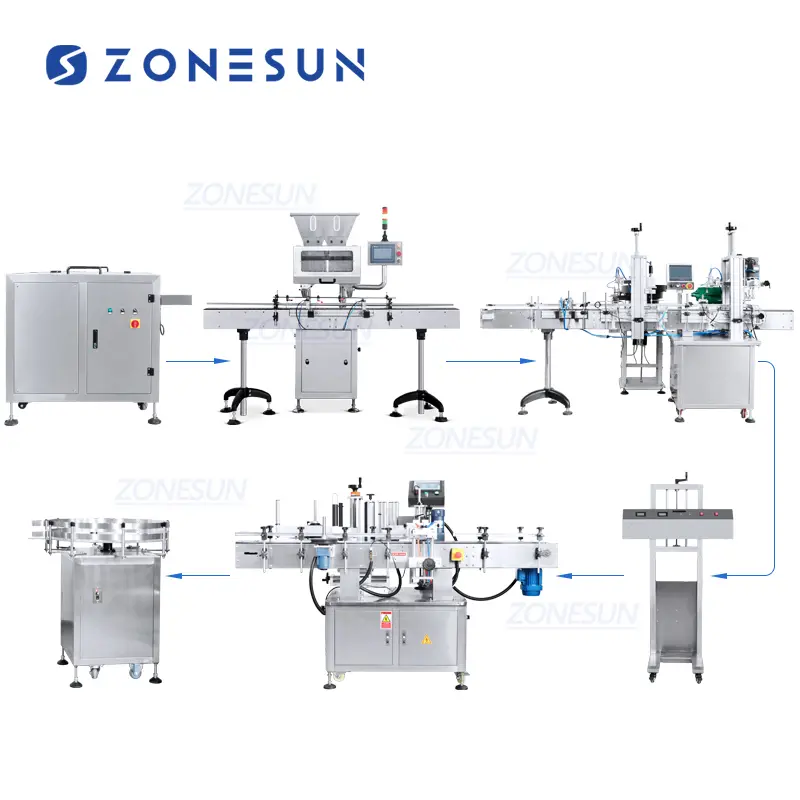
(3) Automatic Fish Oil Capsule Cunting and Filling Line
A different style of automation (counting instead of liquid dosing), but it helps if your facility runs nutraceutical SKUs too.
What are the Applications?
- Hand Sanitizer Production. This automatic filling line is widely used for hand sanitizer packaging, especially when stable fill volume and clean bottle mouths are important. It suits alcohol-based and gel-type sanitizers that need controlled filling without splashing or foaming.
- Lotion and Skincare Products. For body lotions, hair conditioners, and light cosmetic creams, the automatic filling line helps to keep each bottle consistent in weight and appearance. This is useful for brands that package multiple commodities and want fewer complaints about underfilled or messy containers.
- Liquid Soap and Daily Chemical Products. Liquid soap, shower gel, and similar daily chemical products are another common application. The line handles regular production runs well and supports smooth bottle flow when combined with capping and checkweighing.
- OEM and Contract Manufacturing. Factories doing OEM or contract filling often choose this automatic filling line because customers tend to check the net content carefully. The added checkweigher step helps reduce disputes, rework, and product giveaway when running for different brands.
Why Businesses Choose ZONESUN?
Most factories are not running one “standard bottle forever,” so customization matters. ZONESUN typically builds around your bottle size range, cap type, target speed, and product behavior (thin, foamy, thicker). Choosing ZONESUN for an automatic filling line also makes sense if you want the line built as a connected system instead of buying separate machines that do not “talk” to each other well.
Before you order an automatic filling line, make a short checklist:
- Product viscosity and whether it foams
- Bottle dimensions and cap type
- Required output per hour (not just “max speed”)
- Whether weight control is required (many buyers now prefer checkweighing)
- Cleaning routine and changeover frequency between SKUs
If manufacturers can consider those five items, the machine selection will become straightforward. And they will avoid buying a line that looks great but feels awkward in real production.
FAQs
Q1: Do I really need a checkweigher on an automatic filling line?
If you care about reducing giveaways and catching fill drift early, yes, it is one of the most useful add-ons.
Q2: Can one automatic filling line be used for both sanitizer and lotion?
Often yes, but it depends on viscosity difference, filling pump choice, and how often you want to switch products.
Q3: How many operators are usually needed?
Many factories run with 1-2 people for loading bottles and caps, checking alarms, and doing basic cleaning.
Q4: What should I send ZONESUN for a proper recommendation?
Bottle photos and dimensions, cap sample/type, product details (viscosity/foaming), and your target speed and fill volume range.
Q5: Is ZONESUN PACKAGING part of ZONESUN brand?
Yes. ZONESUN PACKAGING is a website of ZONESUN brand. ZONESUN filling, capping, labeling and packaging machines can be offered by www.zonesunpackaging.com.