English
  Russian
  Korean
  Indonesian
  Spanish
  Thai
Thai 

The selection of packaging machines influences the production speed, consistency in the packing process, available floor area, and the amount of labor needed. Examples of these are the horizontal packing machine and the Vertical Packing Machine. While both of these types of packaging machines can automate the processes of bag forming, filling, and sealing, there is a difference in terms of the packaging direction that each one uses.
What Are Horizontal and Vertical Packing Machines?
Horizontal and vertical packing machines perform the same packaging functions; however, their designs and material flows are different. Typically, the materials pass through a horizontal film flow in a horizontal packing machine, whereas in a vertical packing machine, the material is formed and filled vertically. The selection of the two types of packaging machines largely depends on the nature of the products and how they behave in the packing process.
How Does a Horizontal Packing Machine Work?
A horizontal packing machine typically feeds packaging film horizontally through the forming and sealing sections. Products are introduced onto or into the film before the package is sealed, cut, and discharged. Depending on the machine configuration, products can be supplied individually, continuously, or through an automatic feeding system.
This structure is commonly used for products that need controlled positioning during packaging. For instance, products such as biscuits, baked food, soap, hardware items, and other solid materials can be packaged using horizontal packing machines.
How Does a Vertical Packing Machine Work?
A Vertical Packing Machine usually uses a roll of film that travels downward through a forming collar. The film is shaped into a tube, sealed to create the bag, and then filled with the product from above. The machine subsequently seals and cuts the package before discharging the finished bag.
This downward filling process works particularly well for products that can move through a hopper or weighing system. Depending on the configuration, one machine can handle products such as grains, snacks, powders, seeds, spices, and other free-flowing materials. It can also be connected with a weight-checking machine to improve production accuracy.
How Do Horizontal and Vertical Packing Machines Differ?
The main difference is not simply the machine’s appearance. Packaging direction affects product feeding, machine layout, bag formation, and the types of products that can be handled efficiently. A Vertical Packing Machine generally uses vertical product flow, while a horizontal system moves packaging material and products along a horizontal path.
Compare Packaging Directions and Machine Structures
In a horizontal machine, film and products generally travel through the equipment from one side to another. This creates a longer horizontal production path and provides controlled movement for products that need to remain in a specific position.
By comparison, a Vertical Packing Machine uses a more upright structure. Film is pulled downward while the product is normally introduced from the top. This arrangement can reduce the equipment’s horizontal footprint and allows filling systems such as multihead weighers, linear weighers, and auger fillers to be positioned above the bag-forming section.
Compare Suitable Product Types
Horizontal packing machines are generally suitable for solid products that need to be conveyed and positioned before packaging. Products such as biscuits, bakery items, soap bars, trays, and other individually handled goods can move through the machine in a controlled direction. This makes horizontal packaging useful when products require consistent positioning or careful handling during sealing.
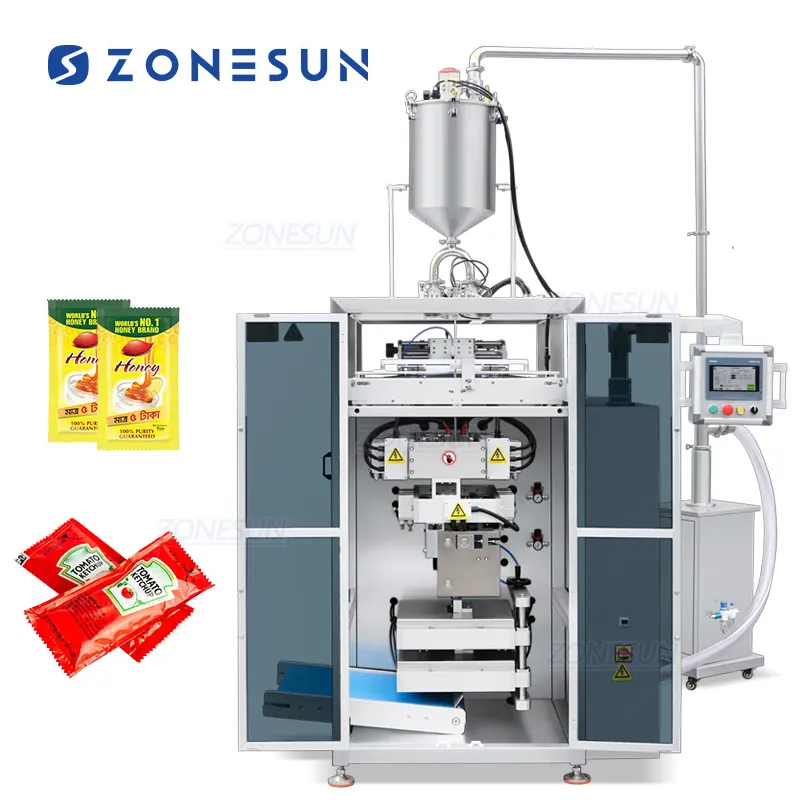
A Vertical Packing Machine is commonly used for products fed from above. It can be used for packing various materials when equipped with different dosing systems. For manufacturers of viscous products in small-dose packaging, achieving accurate filling and reliable sachet sealing can be challenging. ZONESUN PACKAGING’s vertical four-side-seal sachet packaging machine is a practical choice, featuring:
- Filling range: 1-12 ml
- Production speed: 60-100 bags/min
- Filling system: Ceramic piston pump
- Applications: Hair gel, cosmetic cream, face serum, and hair oil
Compare Packaging Speed and Efficiency
Packaging speed depends on the product, filling method, bag size, and machine configuration. Horizontal packing machines can provide continuous output when products are fed and positioned efficiently, while a Vertical Packing Machine can achieve consistent production when combined with a suitable dosing system. The actual speed should be evaluated based on the required package size and product characteristics rather than the machine type alone.
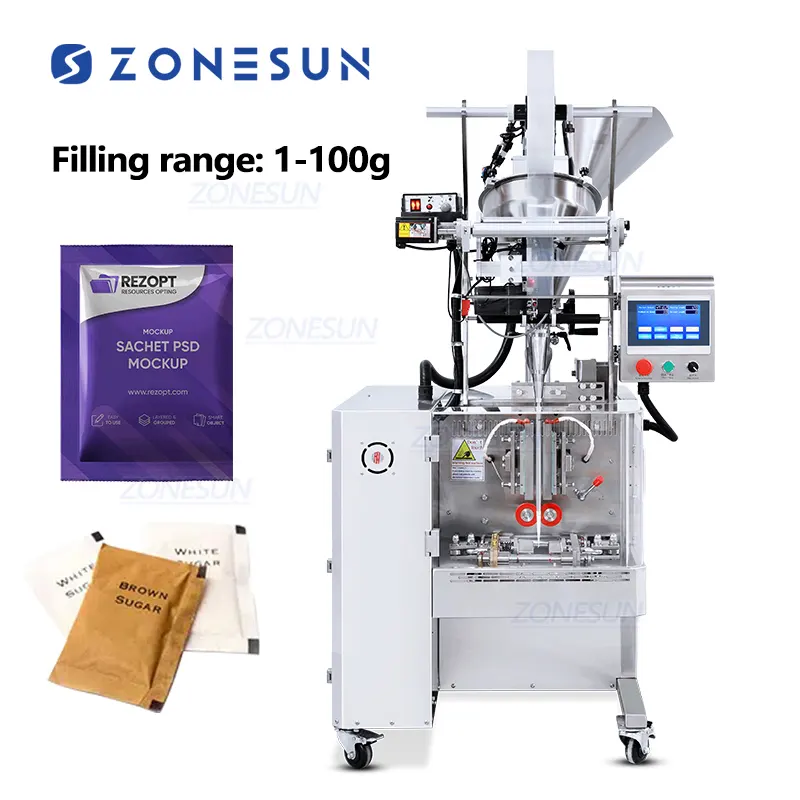
For manufacturers packaging small quantities of powder, maintaining accurate filling while meeting production targets can be challenging, especially when different sachet sizes are required. ZONESUN PACKAGING’s automatic small powder sachet packing machine is a practical choice for this application, combining auger filling with automatic bag forming, filling, sealing, and cutting. Key specifications include:
- Filling range: 1-100 g
- Production speed: 30-60 bags/min
- Filling system: Auger filler
- Suitable products: Coffee, flavoring, probiotic, and collagen powders
- Sealing options: Back-side, 3-side, and 4-side sealing
Compare Bag Styles and Packaging Formats
Horizontal and vertical packing machines can support different bag styles and packaging formats depending on the product, film material, and sealing method. Horizontal packing machines commonly form packages around products that can be placed or conveyed in a controlled position, while a Vertical Packing Machine forms the bag from a continuous film roll and fills the product from above. This makes the packaging direction an important factor when matching the machine with the desired bag structure and production process.
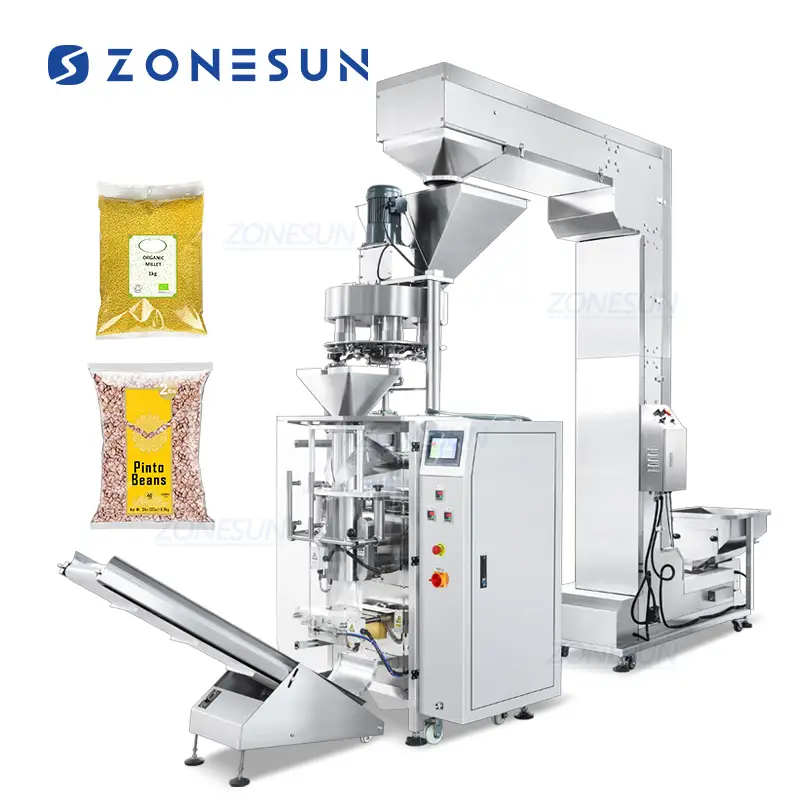
For spice manufacturers, choosing a suitable bagging format while keeping product feeding stable can be challenging, particularly when packaging products such as black pepper. ZONESUN PACKAGING’s vertical black pepper bagging machine with material feeder is a practical choice for this type of application, combining vertical bag forming with automatic material feeding. Key features include:
- Application: Black pepper and similar spice products
- Feeding system: Material feeder
- Packaging process: Bag forming, material feeding, filling, and sealing
- Packaging format: Bagged spice products
Which Packing Machine Is Right for Your Application?
There is no universal choice between horizontal and vertical packaging equipment. The better fit depends on product behavior, package design, available space, required output, and the degree of automation required. A Vertical Packing Machine may fit one production line well, while a horizontal machine may be more practical for another.
When Is a Vertical Packing Machine More Suitable?
A Vertical Packing Machine can be suitable for free-flowing products that can be efficiently delivered through a hopper or weighing system. It is commonly considered for granular, powdered, and small-piece products because gravity-assisted filling can simplify product transfer.
Its upright configuration can also be useful when floor space is limited. With the right feeding equipment, the packaging line can be arranged vertically while maintaining automated weighing, filling, sealing, and discharge. This makes it worth considering for production lines where compact equipment layout and continuous operation are important.
When Is a Horizontal Packing Machine More Suitable?
A horizontal machine can be more suitable when products need to be positioned individually or maintained in a controlled orientation during packaging. Products such as bars, trays, bakery items, and other solid articles can often be conveyed directly into the packaging film.
The horizontal structure can also work well when the package requires controlled product placement or when the product cannot be conveniently dropped from above. In these applications, horizontal product movement may provide better handling throughout the packaging process.
Match the Machine to Your Product and Packaging Needs
Before purchasing either machine, manufacturers should evaluate technical factors such as product size, shape, density, flowability, moisture content, target weight, and fragility rather than choosing based only on packaging direction. Production capacity and package specifications also matter. A requirement of 40 bags per minute differs from one requiring 100 bags per minute, while film width, bag dimensions, sealing temperature, filling accuracy, and available installation space should also match the production requirements.
For automated production lines, equipment integration is another important consideration. A Vertical Packing Machine can be connected with multihead weighers, auger fillers, conveyors, metal detectors, and checkweighers, while horizontal machines can also work with feeding, coding, inspection, and conveying systems. Evaluating the product characteristics, packaging specifications, output requirements, and complete production process together provides a more practical basis for selecting the right machine.
Conclusion
Horizontal and vertical packing machines use different product and film flow directions, so their advantages are closely related to the products and packaging formats they handle. A Vertical Packing Machine is often suited to free-flowing products and compact production layouts, while horizontal equipment can provide controlled handling for individually positioned solid products.
When comparing the two options, manufacturers should consider product characteristics, bag format, target output, filling accuracy, film specifications, floor space, and automation requirements. For businesses evaluating automated packaging equipment, ZONESUN PACKAGING can provide further information based on specific production needs. If you have any questions about choosing the right packing machine, feel free to contact us.