English
  Russian
  Korean
  Indonesian
  Spanish
  Thai
Thai 

Blister packaging machines have all of these functions (forming, product feeding, lidding, sealing, registering, cutting, discharging) performed within one cycle. Due to such integration, any failure of a particular station may result in defective packaging, waste of materials, and lower productivity. Possible failures may vary from improper sealing to misalignment of cavities, empty pockets, film wrinkling, incorrect cutting, stopping, sensor alarms, etc. Troubleshooting of the blister packaging machine consists in the detection of the point of initial malfunction rather than blind changing of the machine parameters.
What Are Common Problems with a Blister Packing Machine?
Poor or Inconsistent Sealing
Among many other checkpoints, sealing is of particular importance, as even a faulty seal or micro-leaks can result in an unacceptable appearance of the blister. Some reasons may be incorrect temperature, absence of pressure, insufficient dwell time, contamination on the surface of sealing tooling, or unsuitable forming /lidding films. Seal performance is also affected by line speed and web movement.
If the seal is good at a slow speed but bad at a fast speed, then the process window is probably too narrow. For this scenario, it will be better for operators to evaluate their actual temperatures and pressure against the present process window and examine the tooling of their sealing equipment for contamination and wear.
Incomplete or Uneven Blister Formation
Incorrectly made blisters will create incorrectly formed pockets, thin walls, cracks, or distorted pockets. The reasons could be wrong temperatures during the blister-making process, wrong vacuum or air pressure, blocked vents, worn tooling, or wrong film thickness. For manufacturers looking for consistent forming and efficient format changeovers, it is an ideal choice to select a suitable blister packaging machine. The ZONESUN PACKAGING ZS-DPP180P offers:
- Customized Molds: Forming molds can be customized to adapt to the film materials and product sizes.
- Modular Design: Selected components can be changed to meet different packaging requirements.
- Flexible Formats: Supports both alu-PVC and alu-alu blister packaging.
- Production Capacity: Working speed of about 4,800 blisters/hour.
- Product Flexibility: Different dispensing structures can be configured for different products.

Film Wrinkles, Tearing, and Misalignment
The principle of operation of blister packing machines guarantees that there will be correct web tensions and proper orientation of the material. Various issues like improper unwind tension, incorrect roll loading, contamination of guide rollers, cuts on the material, and tracking issues may cause wrinkling, tears, and lateral movement.
One should not rush to adjust the sealing station if there are problems with wrinkles. Follow the film or foil from the unwind stage to the sealing stage and identify the point where the material stops being stable.
Empty Pockets and Feeding Errors
The missing pockets may happen because of the incorrect timing and positioning of the products as they enter the blister cavities. The possible causes may include an unstable feeding process, incorrect product placement, or synchronization issues. In cases where the products have to be placed accurately, it may be a good idea to use a blister card packing machine where there is a coordinated feeding and packaging system. The ZONESUN PACKAGING ZS-DDP350 integrates blister forming, backing card loading, sealing, and product discharge to maintain a more consistent packaging flow.
- Automatic Sheet Feeding: Plastic sheets are automatically transferred to the forming section.
- Customized Molds: Molds can be customized for different product sizes and shapes.
- Integrated Process: Forming, backing card loading, sealing, and discharge are combined in one machine.
- Flexible Output: The machine can achieve approximately 40–100 pieces per minute, depending on the product and packaging requirements.
- Wide Application: Suitable for small products such as lip balm, pens, and other blister-card packaged items.

Cutting and Registration Problems
Incorrect registration in a blister packing machine may result in shifts of the print, cavity, or cutting to different positions. The reasons for the problem may include inaccurate web transport, sensor contamination, wrong indexing, material slip, worn traction system, or incorrect format recipe. The cutting problems may also arise because of worn-out punches, damaged dies, loose tools, or previous registration problems.
For instance, an incorrectly positioned cut may not always indicate a malfunctioning cutting tool. The web may have already been incorrectly positioned before reaching the cutting point.
Machine Jams and Unexpected Stops
Problems associated with jams in a blister packing machine could include problems of positioning, film misalignment, accumulation of scrap, and mechanical parts wear. The unscheduled stop of the machine could have been connected with such aspects as air/vacuum, cooling, electric power, and controls. While resetting the machine could start the process again, there is no doubt that the problem would remain.
To be able to diagnose the problem, it is necessary to know when exactly the machine failed, at which station the machine was functioning, what kind of format and materials were used, and at what speed the machine was running.
Sensor and Alarm Failures
Sensors are critical components of a blister packing machine. They are designed for detecting the products’ positions and making them accurately align with workstations. When there is dust, sticky residue, misalignment, damaged wiring, or improper sensitivity settings, the detection will fail, and errors will occur. Unlike basic error codes, alarm logs can provide valuable information about the source of a problem. The lens, mounting, connection, and detection response should be checked before sensor removal as per the machine user guide. It is not recommended to bypass any interlocking or protection devices and continue operation.
How Can You Troubleshoot Blister Packing Machine Problems?
Check Forming and Sealing Parameters
When troubleshooting a blister packing machine, start by inspecting each station. Do not adjust several parameters simultaneously at first. Check the forming temperature, vacuum or air, sealing temperature, pressure, dwell time, and line speed with reference to the approved process. Time, temperature, and tension become common elements of forming and sealing failures.
A practical sequence is:
- Identify the first station where the defect appears.
- Compare actual settings with the approved operating range.
- Inspect whether there is contamination or wear on tooling and contact surfaces.
- Make one parameter adjustment at a time and record its effect.
Inspect Film, Foil, and Material Feeding
When inspecting a blister packing machine, begin with film or foil grade, thickness, condition of the roll, web tension, and feeding process. Confirm that the material is the same as the one specified in the approved packaging specification and feeds without problems through the forming and sealing processes. Fixing the problems with material or feeding will prevent problems with wrinkling, material alignment, and unstable forming.
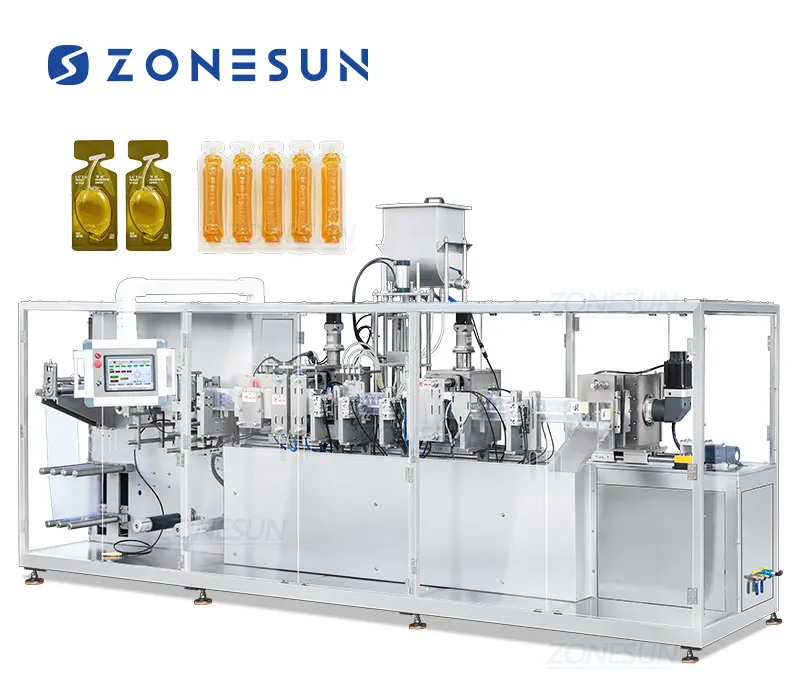
In case of further inconsistent material handling, it will be necessary to have a blister packing machine with forming, filling, and sealing processes included. The ZONESUN PACKAGING ZS-DDP300 incorporates all these processes, including cutting.
- Thermoforming: Heats and forms the packaging material into blister cavities.
- Servo Filling: Provides controlled filling for liquid and paste products.
- Heat Sealing: Seals the formed blister after filling.
- All-in-One System: Performs automatic forming, filling, sealing, and cutting.
- Capacity: Can produce 2,400 to 3,600 pieces per hour. The value will vary when configuration changes.
Check Product Feeding and Pocket Alignment
However, before jumping to conclusions about sealing or cutting issues in the case of a blister packing machine, one should verify the process of product placement first. Check out the feeder timing, product placement, cavity spacing, transfer mechanism, and detection sensors. In case you have empty cavities, which occur periodically, compare the sequence with the feeder cycle and machine indexing. Maintaining product dimensions within the acceptable limits of a blister packing machine is another important step toward feeding consistency and lower reject rate.
Inspect Tooling, Sensors, and Mechanical Parts
The elements involved in making, closing, trimming, and detecting must be checked for any physical damage, such as damaged seal bars, damaged punches or dies, loose fastenings, a contaminated detection sensor, and improper functioning of rollers. It is advisable to document any defect, station, material batch, machine speed, repairs done, and recurring faults.
Conclusion
Typically, issues related to a blister packing machine will never have only one cause. There are various aspects such as sealing, forming, feeding, material handling, registration, cutting, and the control system that affect the ultimate result of the packing process. The best thing to do when troubleshooting this machine is to pinpoint the first unusual point, check the process parameters, and the concerned material or parts.
Troubleshooting also acts as a method of process control for manufacturing companies. It helps to minimize waste materials and speeds up the troubleshooting process. If you need any information regarding selecting blister packing machines or packing requirements, please contact us at ZONESUN PACKAGING.